

The close is nearly done. The variance report is sitting in a spreadsheet that took most of yesterday to pull together. Then the question arrives from the CEO or the board:
“Why did this number move, and what are we doing about it?
The figures in the pack are usually fine.
Everyone can agree on what happened.
What the room still does not have is a clear explanation of why, or a view on what to do next. Someone goes back into the ledger, someone asks sales for a file, and the answer gets stitched together by hand. That pattern is the job, as many CFOs and FP&A leaders experience it.
Below are four frustrations that come up most, and one technique you can use this week for each of them.
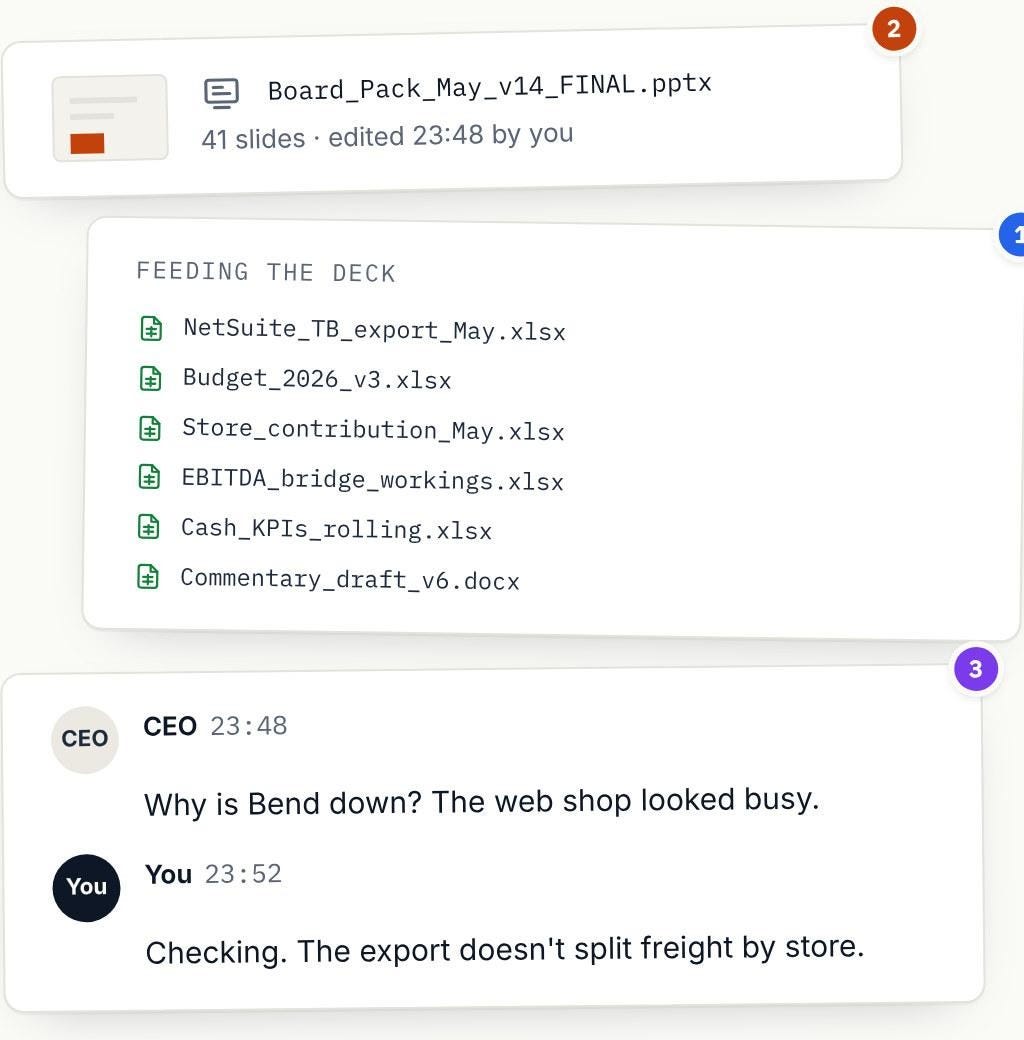
The week of a close still looks like this in a lot of finance teams: six files, a late question, and an export that can’t answer it.
Read on.
Are variances timing or structural?
A financial report is very good at describing what happened, and much weaker at explaining why. And the reason is simple:
The why usually lives outside the general ledger, in billing, the CRM, purchasing, or payroll. Under deadline pressure, commentary slips into restating the number. Sales were down because sales were down. The board already knew that from the table.
So before you open the slide deck.
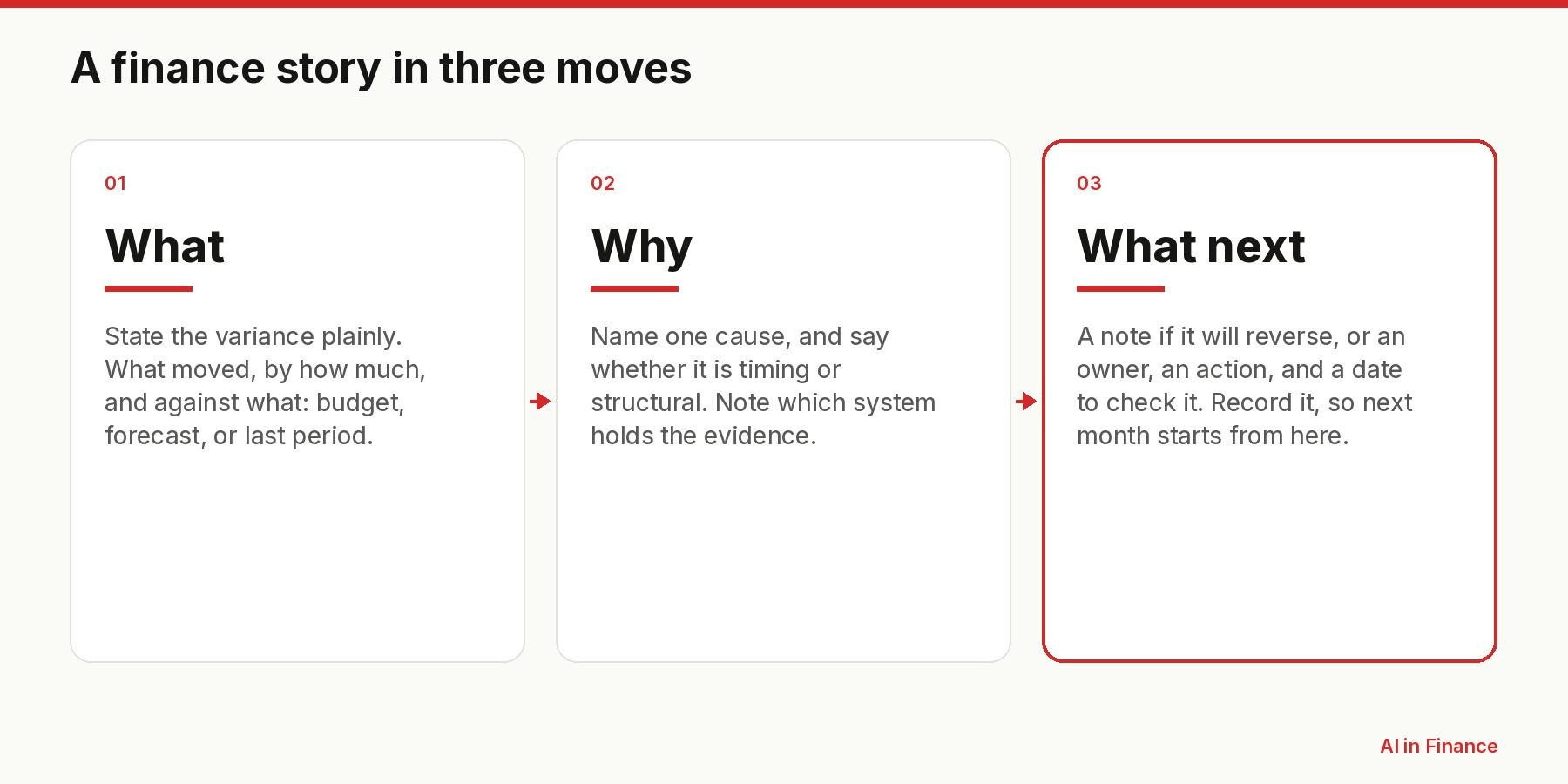
For every material variance, write three lines.
First, state what moved, by how much, and against what: budget, forecast, or last period.
Second, name one cause, and say whether it is timing or structural. A timing difference that will reverse next month only needs a note. A change in price, mix, or cost base is structural and needs a decision.
Third, write the so what and the now what. If it needs action, name the owner, the action, and the date you will check whether it worked. Then record it, so next month’s story starts from this one.
If you can’t get those three lines into a short paragraph, the analysis is not ready yet.
Your board pack is long, and light on the point
Directors have been clear about this.
The packs have also been getting longer.
For companies with more than $500 million in annual revenue,
Board Intelligence later found that the average pack had reached 294 pages. A long pack can still leave the board without a point. The directors in that NACD research wanted two questions answered:
What are the implications?
And what will we stop, start, or do differently as a result?
Open the finance story with one or two sentences that say what matters, then show the figures that support it, then end with the action. If a page does not change what someone should do or watch, move it to an appendix, or cut it.
The why lives in other systems and in people’s heads
Part of why this is so hard to produce on the spot is structural.
Accounting may run on QuickBooks, NetSuite, or Xero, while revenue detail sits in billing and CRM tools and headcount sits in HR and payroll.
Each system can be accurate on its own. You only get the full financial view when a change in one place can be traced to its cause in another.
The other part is memory.
The explanation for a variance often lives in a meeting, an email thread, or the head of one person. When that person leaves, or when a quarter passes, the next close starts from zero. Business partnering was the most sought-after FP&A hiring skill in the 2026 survey, at 48 percent. It is hard to be a partner if you have to relearn the why every month.
When you get a real explanation, pin it to the number immediately.
One line is enough: the cause, who said it or which system showed it, and the date. Next month, start from that note. And when you trace a variance, ask which system holds the driver. Pricing changes usually show up in billing or the CRM.
Cost changes show up in purchasing or payroll. The ledger tells you where to look. The operational system, and the person who knows the context, tell you why.
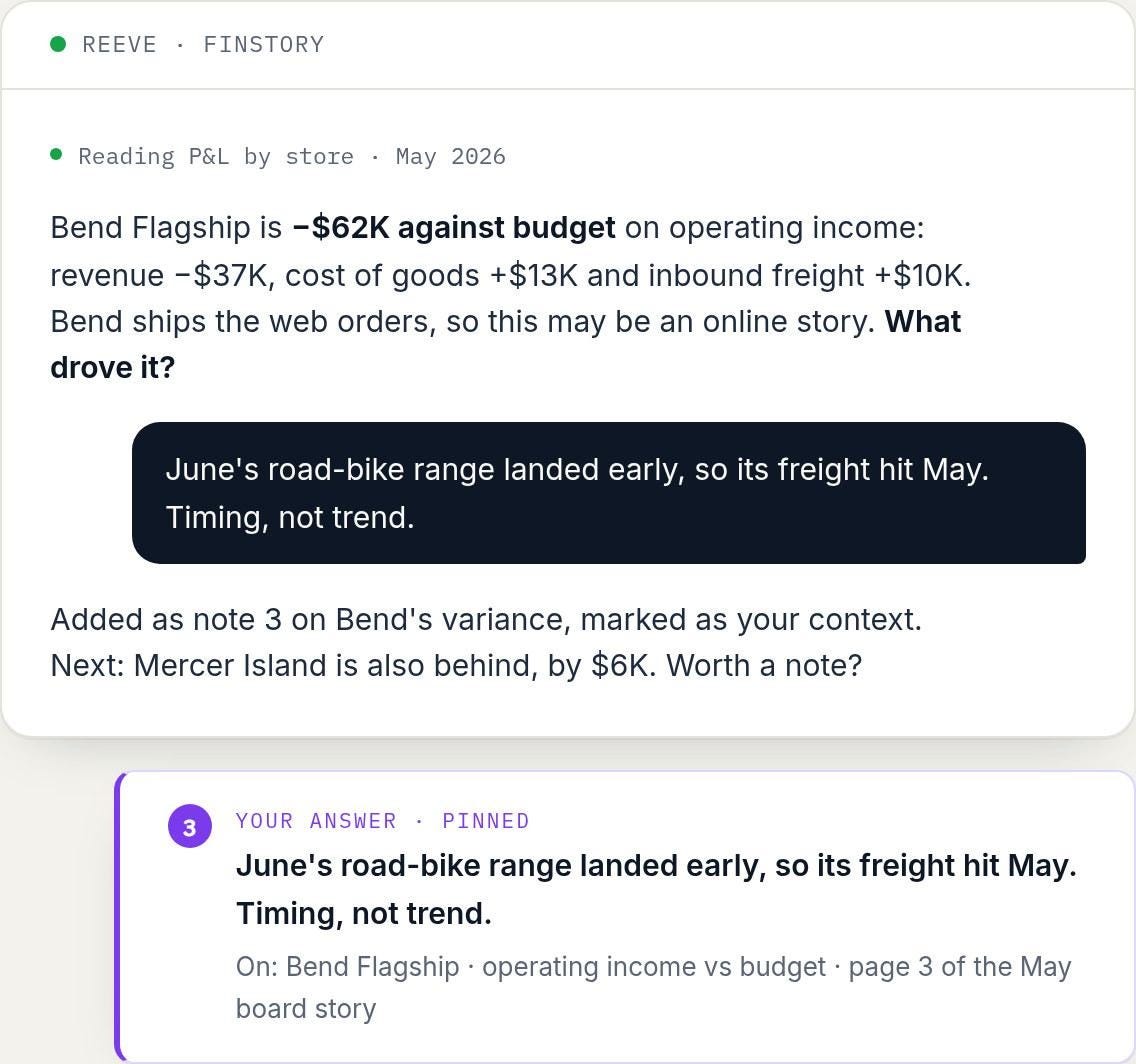
When the ledger can’t say why a number moved, the useful move is to ask and then pin the answer to the figure it explains.
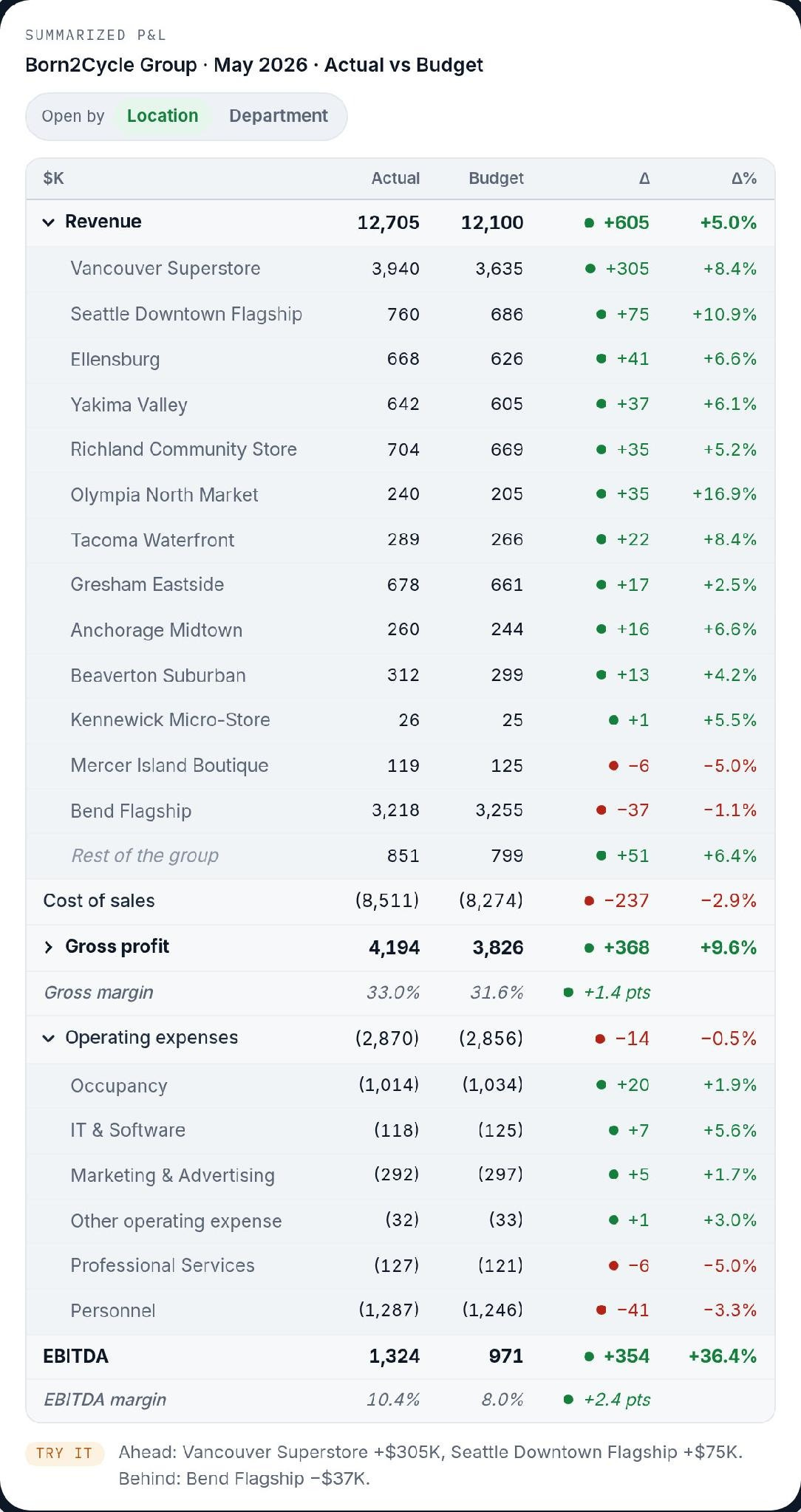
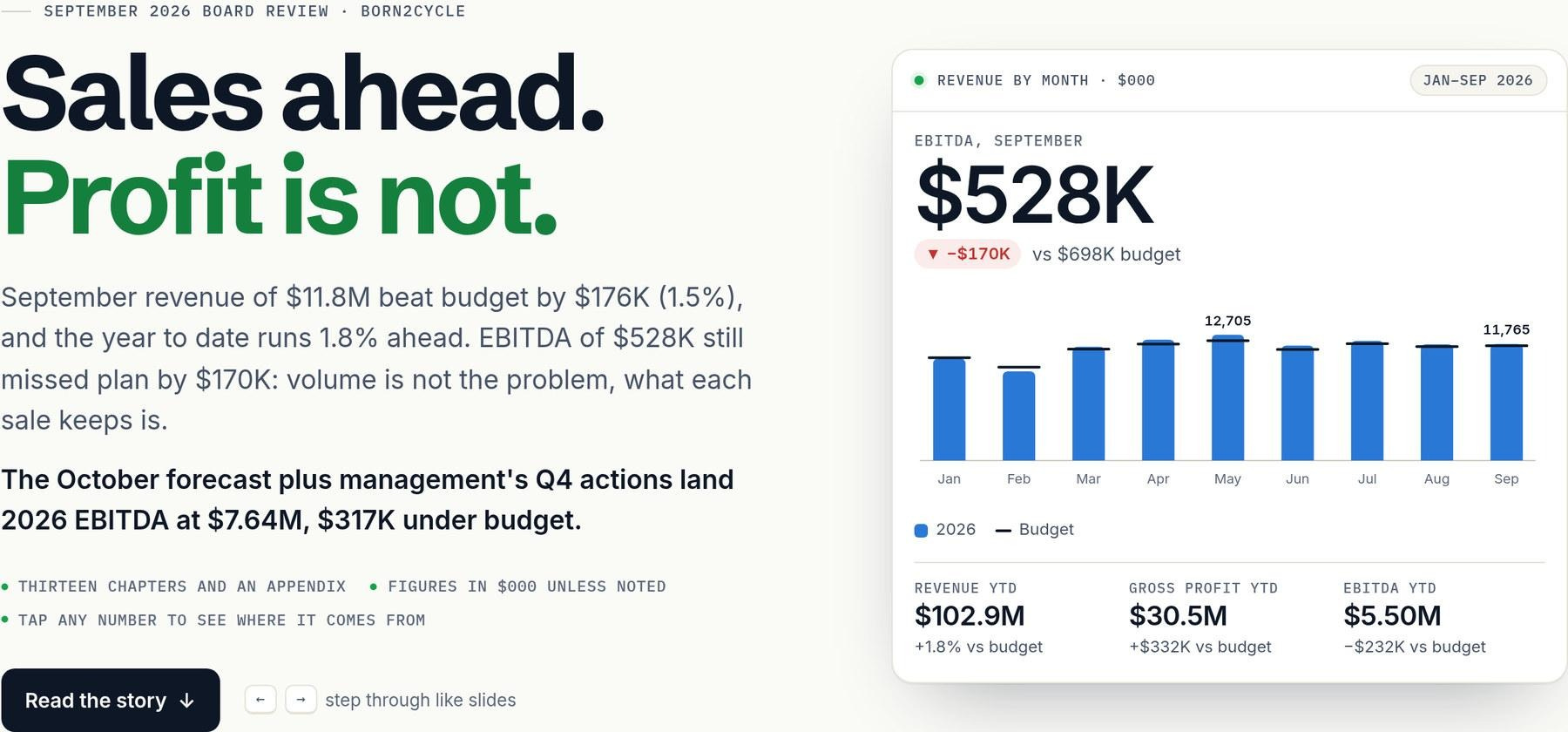
A full view of the close, actual against budget, opened by location. Born2Cycle is finstory’s demo company.
CFOs and FP&A love finstory.ai
Inside finsory.ai lives Reeve, the AI FP&A manager that builds amazing financial stories. It works across connected systems, not just one ledger.
When the ledger can’t say why a number moved, it asks. It pins the answer to that number, and it remembers past decisions so the next story can start from the last one.

Join Wouter Born and experience how AI is happening inside finance live on Wednesday, November 18, at 11 AM ET.

He will show how you can build financial stories in 1 minutes instead of 10 days and take your questions. AI in Finance readers who join get early access before the public launch on November 19.
To keep it practical, the event is open to paid subscribers only.
The link to join the live AI session is below:
Join the live session here
Wouter will lead a live preview of Reeve.
See you inside.
Team at finstory
finstory is the AI FP&A manager that builds amazing financial stories
Find us on LinkedIn | finstory.ai

The three-lines rule is gold — what moved, why, and so what is exactly how retirement numbers should be explained too. Nobody remembers the 294-page pack; they remember the one sentence that told them what to do next.